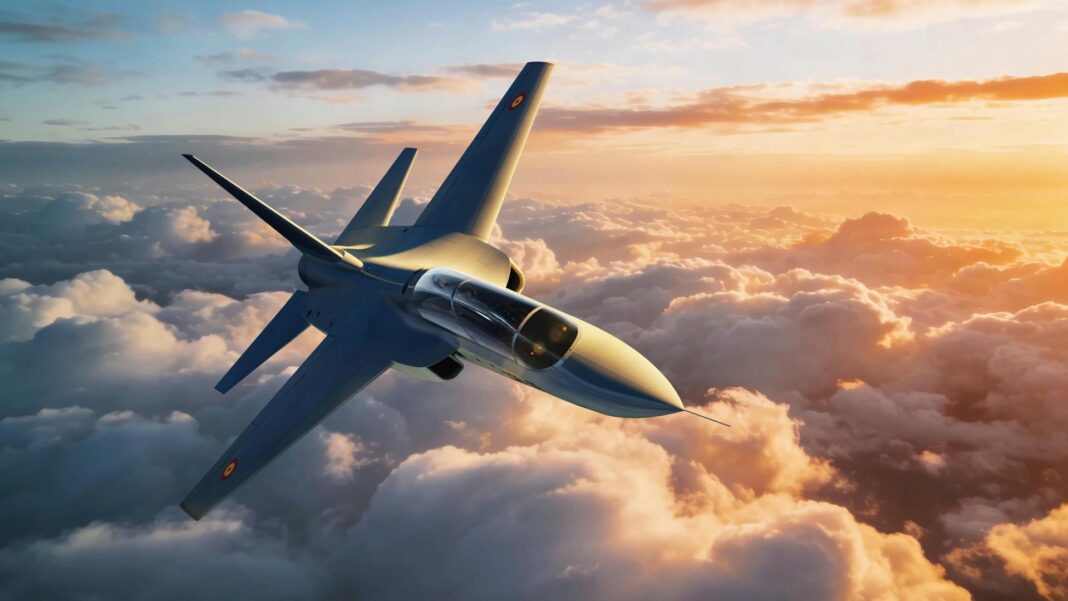

HAVELSAN’s simulator and mission planning technologies will be exported to Spain as part of the HÜRJET advanced jet trainer program, expanding Türkiye’s aviation export package beyond the aircraft itself.
Spain’s procurement of HÜRJET is not limited to the delivery of aircraft. The program also includes a broader training and operational ecosystem, covering simulators, mission planning systems, ground-based training infrastructure and long-term support.
Under the program, HAVELSAN will deliver its Mission Planning System, known as FSGP, for integration with HÜRJET. The company is also developing full mission and flight training simulator capabilities for the aircraft.
HÜRJET Program in Spain
Spain’s HÜRJET procurement program is being carried out under the Integrated Training System – Combat, or ITS-C, framework.
The aircraft will be known in Spain as SAETA II and will replace the Spanish Air and Space Force’s aging F-5 trainer fleet. The program is designed to prepare Spanish pilots for advanced platforms such as the Eurofighter Typhoon and future combat air systems.
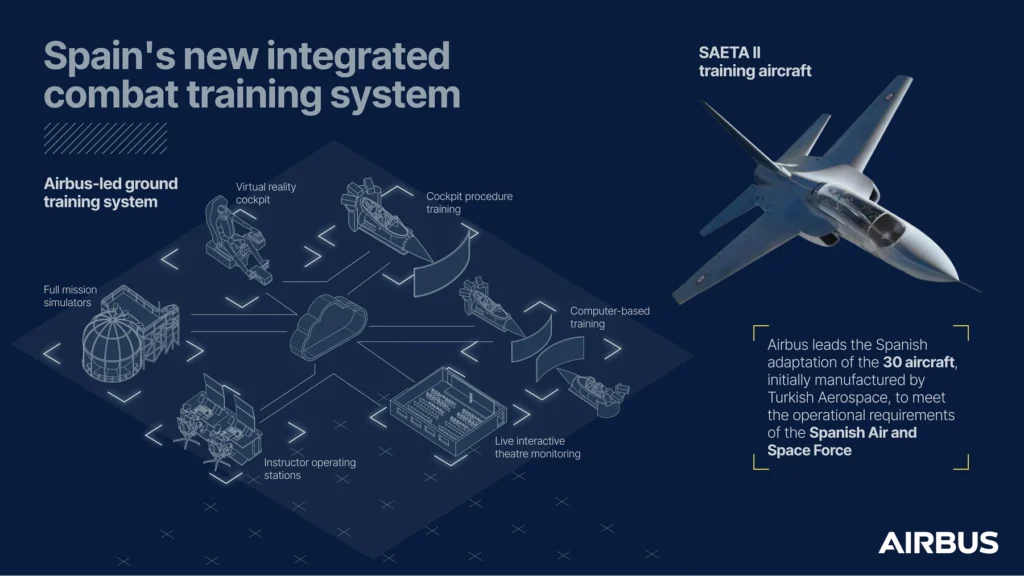
The package includes 30 aircraft, conversion to Spanish standards, simulator infrastructure, mission support systems, maintenance capabilities and industrial participation from Spanish companies.
This means Spain is not only acquiring a new trainer aircraft, but also building a complete advanced pilot training ecosystem around the HÜRJET platform.
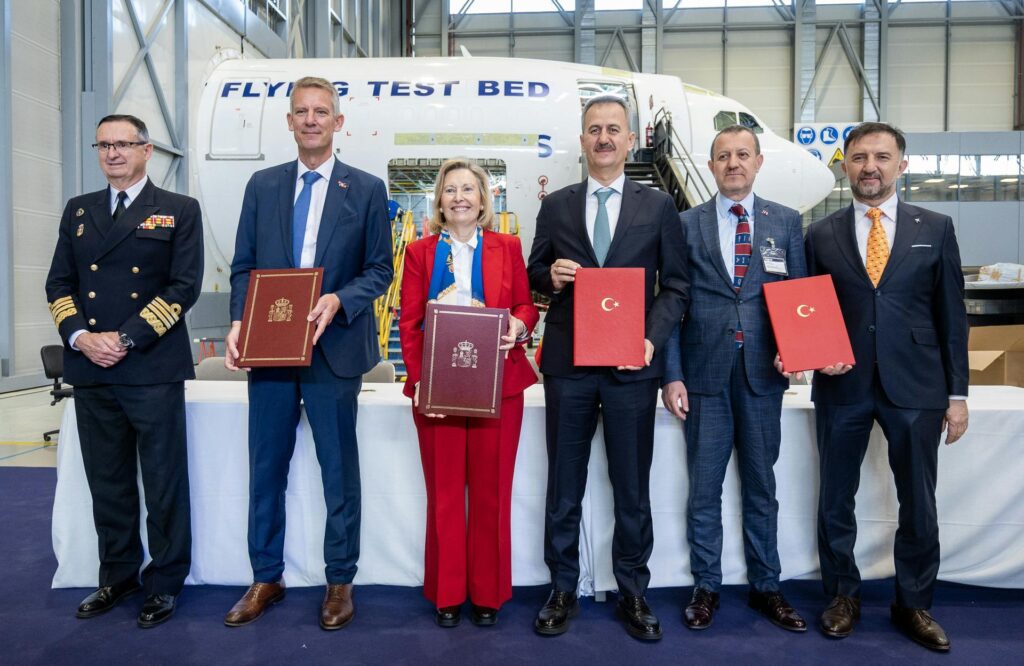
HAVELSAN’s Role in the Program
HAVELSAN will provide the mission planning layer that supports the operational use of HÜRJET.
The company’s FSGP Mission Planning System has been developed over many years and has been actively used by the Turkish Air Force since 2007. It supports mission planning, pre-flight preparation and post-mission evaluation processes.
For HÜRJET, FSGP will provide a common mission planning capability for both Türkiye and Spain. This is important because it allows the aircraft to be supported by a shared digital operational architecture rather than being delivered only as a flying platform.
In parallel, HAVELSAN is also delivering full mission and flight training simulator capability for HÜRJET. These simulators will allow pilots to rehearse flight profiles, mission scenarios, emergency procedures and operational tasks before live flight training.
From Imported Simulators to Exported Training Systems
The export of HÜRJET simulator and mission planning technologies to Spain is strategically important for Türkiye.
For years, Türkiye relied on foreign suppliers for many flight simulation and mission planning systems. With HAVELSAN’s role in the HÜRJET program, this direction is now changing.
Türkiye is no longer exporting only an aircraft. It is also exporting the software, simulator and operational preparation systems that support that aircraft throughout its service life.
This strengthens the value of the HÜRJET export package and increases Türkiye’s position in the international military aviation training market.
Spain’s Training Infrastructure
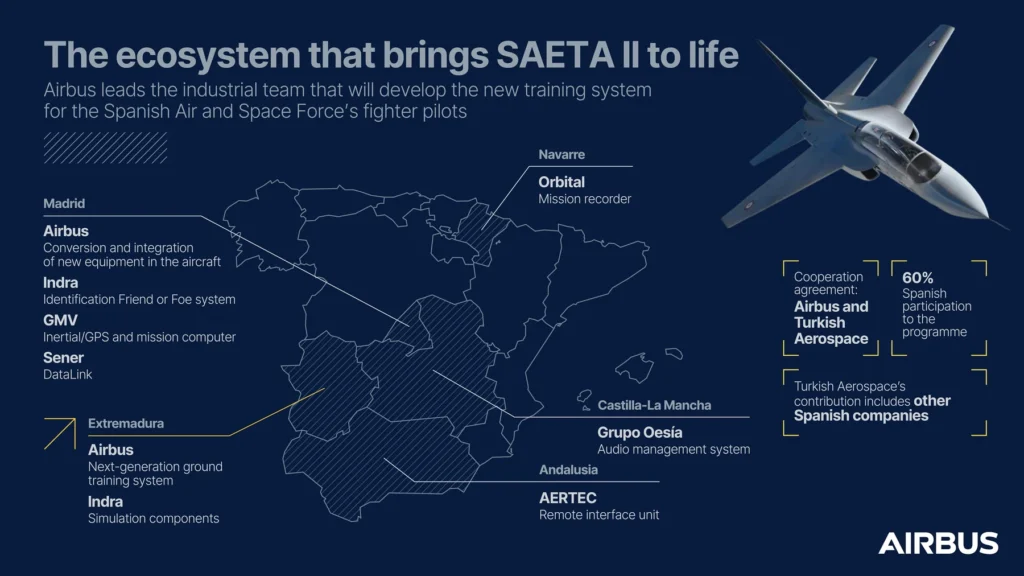
As part of the SAETA II program, Spain will establish new training and conversion infrastructure for its future fighter pilots.
Airbus will lead the redesign of the Fighter and Attack School Training Center at Talavera la Real Air Base. The training infrastructure will include modern simulators, logistics support, operational support and maintenance capabilities.
Spanish industry will also play an important role in the program. Local partners will contribute to mission computers, identification friend-or-foe systems, avionics and other critical technologies.
HAVELSAN’s simulator and mission planning systems will therefore become part of a wider Türkiye-Spain industrial and operational cooperation model.
Strategic Importance
The HÜRJET program marks a historic aviation export milestone for Türkiye because it represents the country’s first export of a manned, jet-powered aircraft to a NATO and European Union member state.
HAVELSAN’s participation makes this milestone even more significant.
With the simulator and mission planning package, Türkiye is exporting a complete training ecosystem rather than a standalone aircraft. This creates long-term value for the customer and strengthens Türkiye’s reputation in defense software, simulation and training technologies.
For Spain, the system will support the transition from the F-5 to SAETA II and prepare pilots for next-generation air combat requirements.
For Türkiye, the export shows that Turkish companies can now provide not only platforms, but also the digital, training and mission systems that define modern airpower.